8 Shopping Tricks Retailers Use With Discount Pricing
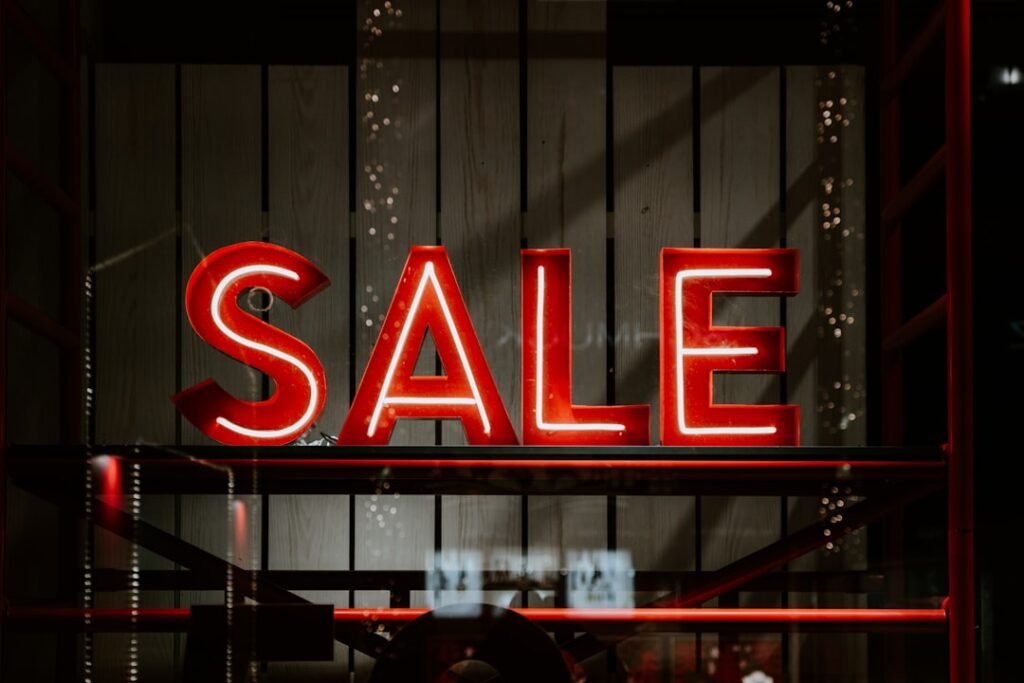
A lot of what feels like a great deal is engineered behavioral psychology, not luck. Here are 8 real pricing tactics retailers use, backed by research on how our brains actually process prices.
1. Price anchoring
The first price you see becomes your mental reference point for everything after. This idea comes from research by psychologists Amos Tversky and Daniel Kahneman on how arbitrary numbers skew our judgment, and retailers use it constantly: a $180 “was” price makes a $119 “now” price feel like a steal, even if $119 was always a reasonable price on its own.
2. Inflated “original” prices
Some retailers raise a price briefly just to mark it back down and advertise a “limited-time” discount, making the discount look bigger than it is relative to what the item typically sells for.
3. Charm pricing
Prices ending in .99 or .95 are processed by our brains as meaningfully cheaper than the next whole number, even though the actual difference is a cent or two.
4. The decoy effect
A deliberately unattractive middle option makes a more expensive option look like the obvious best value. A $3 small, $7 large, and $6 medium popcorn is a classic example, the medium exists to make the large feel worth the extra dollar.
5. Bundle pricing
Research on bundled pricing (like “3 for $5” instead of $1.67 each) has shown it can meaningfully boost sales, since a round bundled number feels like a better deal than the equivalent per-unit math.
6. Countdown urgency
Countdown timers and “only X left” messaging create time pressure that discourages the comparison shopping that might reveal the discount isn’t as large as it looks.
7. Tiered good-better-best pricing
Offering three tiers nudges most shoppers toward the middle option, which is often the highest-margin choice for the retailer, by making it feel like a safe, moderate decision.
8. Competitor price comparisons
Showing a competitor’s higher price next to their own uses the competitor’s number as the anchor, making their price look better by comparison, regardless of whether it’s actually the best price available.
Before trusting any advertised discount, run the actual numbers yourself with our discount calculator, especially when stacking multiple discounts or comparing bundle pricing, and see exactly why 20% + 10% off isn’t 30% off.
What is price anchoring and why does it work?
Price anchoring is when the first number you see becomes your mental reference point for judging everything after. Research shows this bias affects our judgment even when we know the anchor is arbitrary or inflated.
How can I tell if a discount is genuinely a good deal?
Look up the item’s typical price across a few retailers before relying on the “original” price shown, since that reference price isn’t always accurate or recent.
Does the decoy effect really change what people buy?
Yes, it’s a well-documented pricing tactic where a deliberately less attractive option is added specifically to make another option look like better value by comparison.
Written by EquateWorld Team
Part of the EquateWorld editorial team.