6 Time Zone Mistakes That Mess Up Meeting Schedules
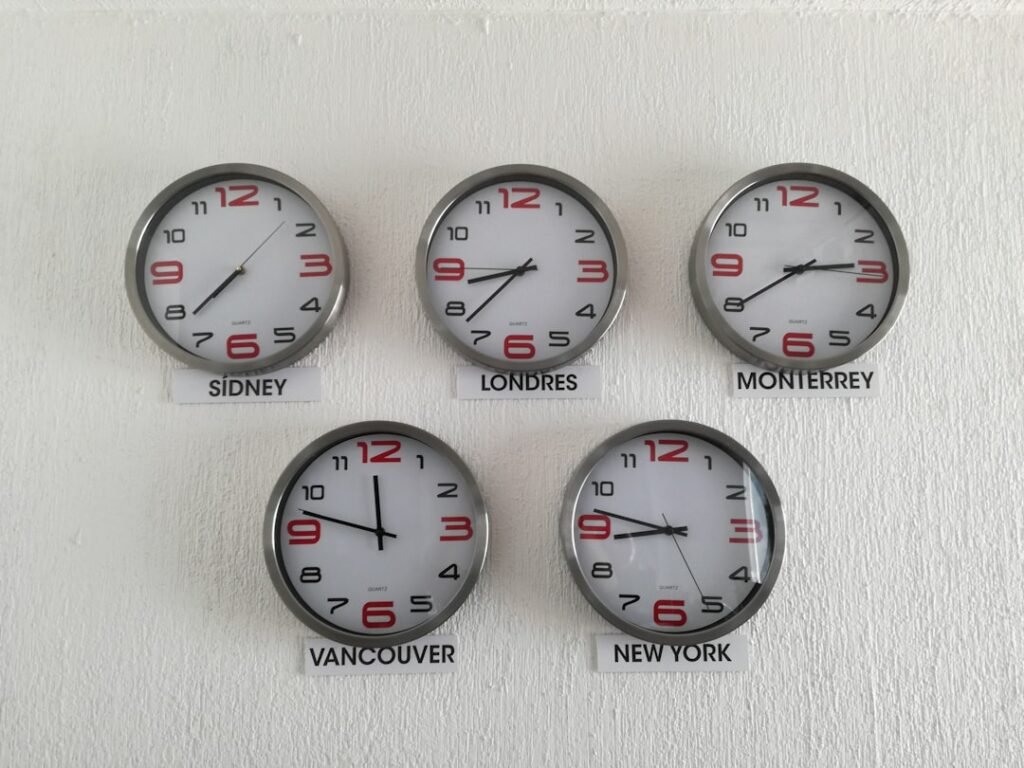
Global teams report cross-timezone meetings getting harder, not easier, and a single scheduling slip can mean half your team shows up an hour off. Here are 6 mistakes that cause it.
1. Assuming everyone knows your time zone
Even internally, don’t assume colleagues automatically know which zone you’re in. State it explicitly every time, especially with remote or hybrid teams.
2. Using ambiguous abbreviations
“EST” alone can be misread since some regions use similar abbreviations for different offsets. Use full time zone names or reference a specific city instead of a bare abbreviation.
3. Forgetting some regions don’t observe Daylight Saving Time
Arizona doesn’t observe DST, unlike most of the US, which means the time difference between Phoenix and, say, Denver actually changes depending on the time of year. Over 70 countries observe DST, but not on the same start and end dates, so the “standard” offset between two cities can quietly shift.
4. Specifying “Daylight” or “Standard” instead of just the zone name
Writing “10 AM Eastern Time” and letting calendar software resolve whether that’s EST or EDT avoids a common error: manually guessing which one is currently in effect and getting it wrong.
5. Miscounting the number of zones apart
Manually counting zone differences is genuinely error-prone, mixing up whether a colleague is ahead or behind, or missing an unusual offset like Western Australia’s UTC+8, a zone most people don’t carry in their head.
6. Scheduling right around a DST transition date
Because different countries flip their clocks on different dates, a meeting scheduled during that transition window can shift by an hour for one party but not the other, even though nothing about the meeting itself changed.
A simple habit that prevents most of this
State both times explicitly in the invite: “2:00 PM PST (5:00 PM EST for you).” It takes seconds and removes almost all ambiguity. For the underlying date math itself, our time calculator and date calculator handle the raw duration and date calculations accurately.
Why does the time difference between two cities sometimes change?
When one region observes Daylight Saving Time and another doesn’t (like Arizona vs. most of the US), or when two countries switch their clocks on different calendar dates, the effective time difference between them shifts during part of the year.
Should I write “EST” or “EDT” in a meeting invite?
A common trick is to write just “Eastern Time” without specifying Standard or Daylight, letting calendar software automatically resolve the correct offset rather than guessing manually.
What’s the safest way to schedule a meeting across many time zones?
State both parties’ local times explicitly in the invite, or reference a neutral standard like UTC, and use calendar tools that automatically convert and adjust for DST rather than doing the math by hand.
Written by EquateWorld Team
Part of the EquateWorld editorial team.